
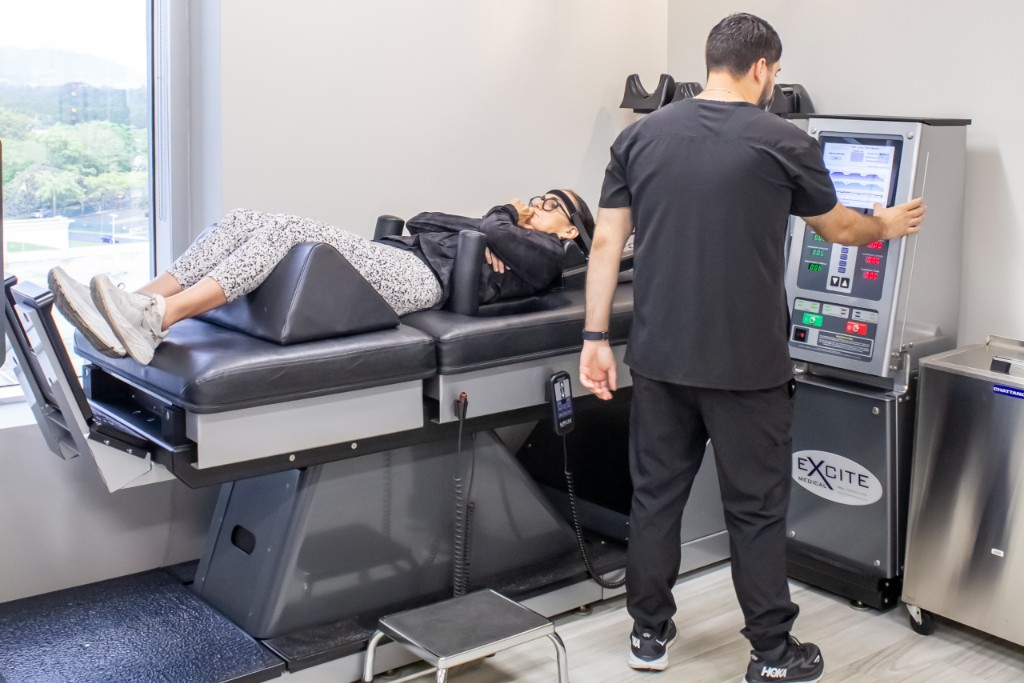
Persistent lower back pain, a herniated disc, or sciatica can make everyday activities like walking, working, and sleeping difficult. When symptoms persist, it is natural to look for ways to regain mobility before considering surgery.
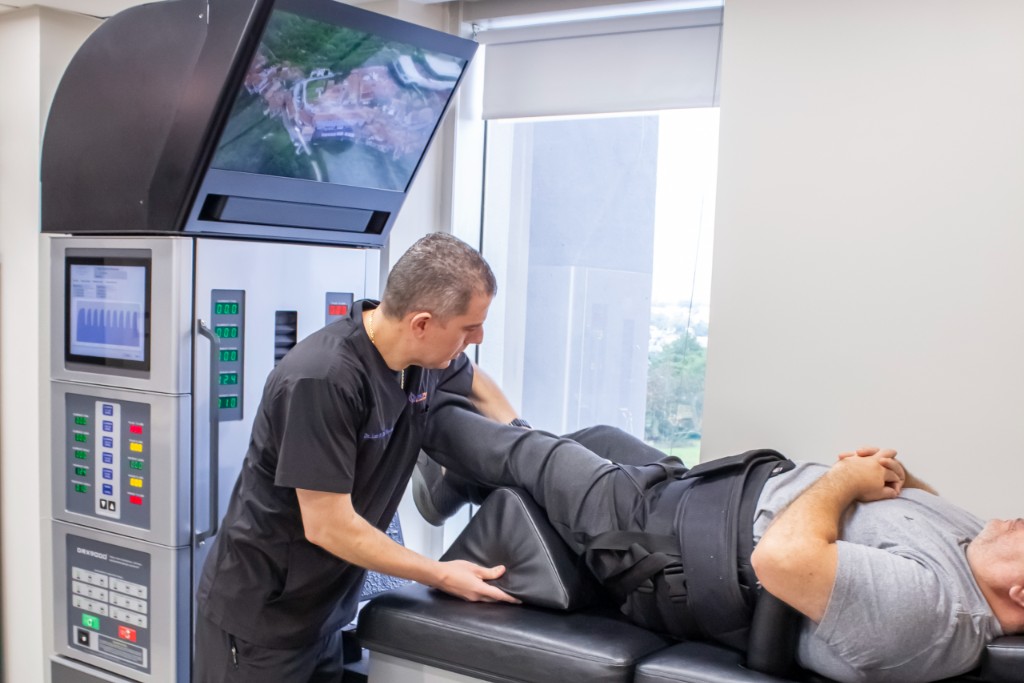
At QuiroPlaza in San Juan, Puerto Rico, our chiropractic care options include nonsurgical spinal decompression with the DRX9000® system. This treatment uses a specialized table and computerized controls to apply measured forces to the spine.
Spinal decompression may be an option for some people with disc problems after a professional evaluation confirms that it is appropriate. Our team reviews your symptoms and available medical information and discusses your care options. You can schedule an evaluation at our office in the Plaza Las Américas Tower.
What is computerized spinal decompression and how does it work?
Computerized spinal decompression is a nonsurgical technique that uses a mechanical system to apply controlled traction to the spine. It is used in some patients with disc problems and symptoms related to pressure on nerve structures.
The goal is to temporarily change the forces acting on the spinal discs and reduce the load in the area being treated. One proposed mechanism is negative intradiscal pressure, meaning a decrease in pressure inside the disc during controlled traction. In theory, this may help relieve some symptoms or promote disc rehydration in certain cases. Responses vary, and there is no guarantee that a herniated disc will retract or that a disc will rehydrate.
How does computerized decompression differ from conventional traction?
Traditional traction uses stretching forces applied to the spine. Specialized computerized systems such as the DRX9000® allow the clinician to program and adjust those forces during the session. The aim is to tailor the treatment to the patient’s response and reduce involuntary muscle resistance to stretching. Responses vary, and discomfort may persist.
Nonsurgical spinal decompression is distinct from decompression surgery. For more on the different techniques and their limitations, see Cleveland Clinic’s overview of spinal decompression therapy. Before starting treatment, the QuiroPlaza team reviews your symptoms, medical history, and imaging when appropriate.
Conditions evaluated for spinal decompression at QuiroPlaza
Spinal decompression is used in selected cases of pain involving spinal discs and nerves. Whether it is appropriate depends on the diagnosis, the severity of symptoms, and the individual evaluation.
- Herniated or protruding disc: Disc material extends beyond its usual position. This can happen in the lower back, for example at L4–L5 or L5–S1, or in the neck, such as at C5–C6. Some herniations cause no symptoms, and treatment varies.
- Bulging disc: A disc bulge may be associated with discomfort, although it can also occur in people without pain.
- Sciatica and radicular pain: Irritation or injury to a nerve root can cause pain that travels from the lower back or buttock down one leg. Affected nerves in the neck can cause symptoms that travel down the arm. Tingling or numbness may also occur.
- Degenerative disc disease: Spinal discs can lose hydration and height over time. Imaging findings should be interpreted alongside symptoms and the clinical examination.
- Spinal or foraminal stenosis: Narrowing of the spinal canal or the openings where nerves exit may cause pain and other symptoms. The suitability of decompression depends on the cause and severity.
- Persistent pain after back surgery: Conservative care may be considered for some people with ongoing symptoms after surgery. This requires careful evaluation and sometimes coordination with the treating specialist.
Cleveland Clinic’s guide to herniated discs explains that symptoms and treatment options vary, and that many herniated discs improve without surgery. A herniation or protrusion on an MRI does not automatically explain the pain. Treatment decisions should be based on a complete evaluation.
Why consider spinal decompression before spine surgery?
When back pain persists, the choice of treatment depends on its cause, your symptoms, your overall health, and what you have already tried. Nonsurgical spinal decompression uses a specialized table and requires no incisions or general anesthesia. Patients can often resume their usual activities afterward, depending on how they feel and the instructions they receive.
- Noninvasive care: No implants, screws, or surgical incisions.
- Outpatient treatment: Sessions take place in the office without hospitalization for the procedure.
- Individualized plan: The evaluation guides whether to recommend treatment, how often to schedule sessions, and whether to combine them with other therapies.
- Conservative care: Spinal decompression may be discussed before surgery when clinically appropriate.
The World Federation of Neurosurgical Societies recommends conservative treatment as the first option for most lumbar disc herniations in the absence of serious neurological deficits. Decisions depend on symptoms and the clinical evaluation. If a specialist has recommended surgery, you can ask whether a conservative option is reasonable in your case. Do not delay a medically indicated procedure or stop prescribed treatment without consulting your healthcare professional.
At QuiroPlaza, Dr. Luis B. Rivera Nazario and the team can review your situation and discuss the available chiropractic care options.
What to expect at our Plaza Las Américas office
1. Initial evaluation
We review your medical history, where the pain is located, how long it has lasted, and whether symptoms travel into your arms or legs. Bring any recent MRI or X-rays so the team can review them as part of the clinical evaluation. Imaging alone does not determine treatment. Some findings or symptoms may warrant a referral to another healthcare professional.
2. A session on the DRX9000® system
If you are a candidate, the team will explain how to position yourself on the table and how the harnesses stabilize the relevant areas. The system applies controlled forces based on the settings selected for your session. Sessions typically last 30 to 40 minutes, though the duration can vary. Some protocols may involve 20 to 24 sessions. The number and frequency depend on the initial evaluation and how you respond.
3. Complementary therapies
Depending on your needs, your plan may include chiropractic adjustments, Class IV laser therapy, or a computerized spinal assessment. Each has a different purpose and should be combined only when appropriate. Report any change in pain, sensation, or mobility so the team can decide whether to continue, adjust the plan, or recommend further evaluation.
Frequently asked questions about spinal decompression in Puerto Rico
Does spinal decompression hurt during the session?
Some people feel a controlled stretch or pressure, while others may feel discomfort. Tell your clinician if you experience significant pain, worsening symptoms, or an unusual sensation.
How many sessions are needed for lasting improvement?
There is no universal number. Some protocols include 20 to 24 sessions, but the appropriate number depends on the evaluation, response to treatment, and your goals. Lasting improvement is not guaranteed.
What should I bring to my first appointment?
Bring any recent MRI, X-rays, medical reports, or records of previous treatment. Let the team know about medications, prior surgeries, and any changes in your symptoms.
Do you accept health insurance for a spinal decompression evaluation?
QuiroPlaza works with several insurance plans in Puerto Rico, including Triple-S, MCS, MMM, and First Medical. Coverage varies by insurer, contract, and service. Before your visit, ask our team about coverage for the evaluation, available benefits, and any copayments or other conditions.
Where are you located in San Juan?
We are in the Plaza Las Américas Tower, Suite 805, in San Juan, Puerto Rico. Call (787) 334-1961 to check availability and schedule your evaluation.
Schedule your evaluation
Talk with the QuiroPlaza team to find out whether computerized spinal decompression may be appropriate for your condition.